By now I’m sure you’ve all heard about the tragic events that occurred last weekend in Japan. When events like this occur, I can’t help but wonder, what would I do if something like this happened? Would my family have what they needed to survive? Sadly, right now, the answer is ‘no’. Not my little family anyway. My parents made up 72 hour kits when I was little and I think they are still in the garage. So, the clothes might not fit and the food may be less than fresh, but they probably wouldn’t die of starvation. Better off than my little family that has nada! But, I’m going to remedy that. Do you need to do a little remedying yourself? Let’s do this together, yeah?
Here’s the How:
So, I looked at several 72 hour kit lists, they were all slightly different, but pretty much the same. There are about 7 categories of things you will need to gather. Each person in your family should have a 3 day supply (3 days=72 hours) of the things from each category. If you have a large family (Like more than 3 people), this could be a little daunting. But, it will be worth it when you have food to eat and everyone else is starving. If you need to, gather things slowly, even over several months, and start putting your kits together in stages as your budget, time, or whatever allow.
FOOD & WATER –
Each person will need three days supply of food and water. Think of things that are easy and require little to no preparation. You may not have electricity or gas when you need to use this kit, therefore, cooking becomes more difficult.
Ideas-
Granola Bars
Trail Mix & Dried Fruit
Crackers & Dry Cereals for snacking
Canned Goods (tuna, beans, turkey, beef, Vienna sausages, corn, carrots, ect). Pop-top cans may seem like a great idea, but when we cleaned out my parents kits a few months ago, some of the pop-tops were no longer sealed and made a huge sticky mess all over the inside of the bag. Just buy a cheap can opener instead and throw it in with everything else. Better safe than sticky, right?
Canned Juice (if you rotate your 72 hour kit supplies like you’re supposed to, bottled juice would be okay too).
Candy and gum (Jolly Ranchers can melt and mint gum can make everything else taste like mint).
Water (1 gallon/day) 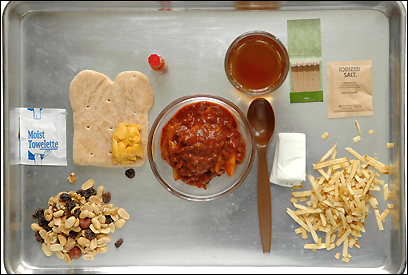
BEDDING & CLOTHING
Every member of your family will need the following:
Change of clothes (1 or 2 pairs)
Underwear (3 pairs)
Rain Poncho
Blankets and Emergency Heat Blankets
Flat cloth sheet (size is up to you)
Plastic sheet (the thicker the plastic the better)

SUPPLIES
Each person will need the following (ok, obviously your two year old isn’t going to need matches, but having extras around can’t hurt):
Flashlights, lanterns, lamps or headlamps
Batteries for each of the above
Flares
Candles
Butane Lighters
Water-proof Matches
Dishes & Utensils (Camping sets are great, they tend to be a little more sturdy than your standard plastic dish set).
Pen & Paper (Younger children can be kept entertained with it, so be sure to put some in their kits too).
Pocket Knife
Rope
Duct Tape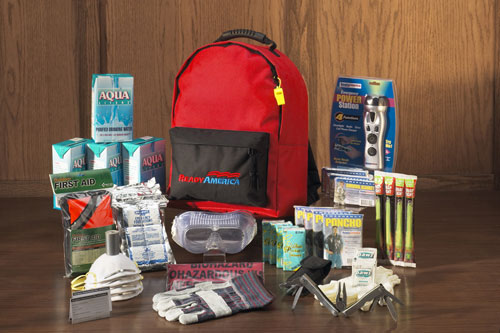
FAMILY SUPPLIES
In most cases, one set of these things will be sufficient. There is always the possibility of your family getting separated in a disaster, so each person having their own is not a bad idea either.
Dish Soap (I suggest storing this in a zippy bag, in case of spills).
Can Opener
Radio with Batteries
Axe
Shovel
PERSONAL ITEMS
Each person will need:
First Aid Kit (I wrote up a separate post with items to include in your first aid kits, as there are quite a few suggestions)
Toiletries (toilet paper, feminine hygiene, hair brush, tooth brush and paste, wet wipes to wash off with, soap, shampoo, hand sanitizer, ect. Scented items may ‘flavor’ some food items).
Immunization Record
Over-the-Counter Medication (Tylenol, Ibuprofen, Motrin, children’s medication, teething gel, ect).
Prescription Medication (enough for at least 3 days)
Diapers and Other Infant Needs Items (if applicable)
DOCUMENTATION & MONEY
Place these items in a water-proof pouch for protection.
Legal Documents (I will actually make copies of these to store in our kits. I have to refer to the original documents more often than I want to have to dig into the 72 hour kits. I may regret this later, but I guess I’ll cross that bridge if I ever come to it. Knock on wood!)
Vaccination Papers
Insurance Policies
Cash
Emergency Credit Cards
Pre-paid Phone Cards
Other Personal or Important Documentation (Citizenship papers, if applicable. Military documentation, religious documents, personal & family history records, ect).
THINGS TO KNOW ABOUT YOUR 72 HOUR KITS
Kits should be updated every six months. Some people schedule this into their calendars so they don’t forget. Make sure all the food, medication, water and first aid kit supplies have not expired. Check clothing sizes. It would be awful to be 6 months pregnant and only have your skinny clothes available. Or your 7 year old daughter in 3T sizes. Make sure the documents (immunization records especially) are up-to-date. Check for corrosion in flashlights, lanterns, the radio, and on your batteries.
It will be helpful if you have some things to entertain and comfort your children with in an emergency situation. Small toys/games would be a good addition.
While gathering supplies, put your older family members to work. They can gather their own supplies and you can check to make sure they didn’t miss anything. This way they will know (at least, they should) what is in their kit.
Package anything that might leak, drip, spill, melt, or pass a flavor to other items in a zippy bag. Beef jerky, mint gums and Jolly Ranchers are some that I came across as being problematic.
DISCLAIMER: I have not put my own kits together recently, but I have put kits together before. Most of this information came from {HERE}. It is an about.com page under the category Latter-Day Saints. This information is still pertinent, even if you are not a member of the LDS Church, although it is directed at those that are member. If you visit this site, please be respectful.
ALSO, I have never been in a situation where I needed to use a 72 hour kit, so I can’t say “I wish I would have had…” If you have experienced using a 72 hour kit and have other suggestions, please leave them in the comments.
P.S. I didn’t visually cite the sources for the photos, but if you click the photo it will take you to the source.
Krista

